
From AI Ambition to AI-First Reality
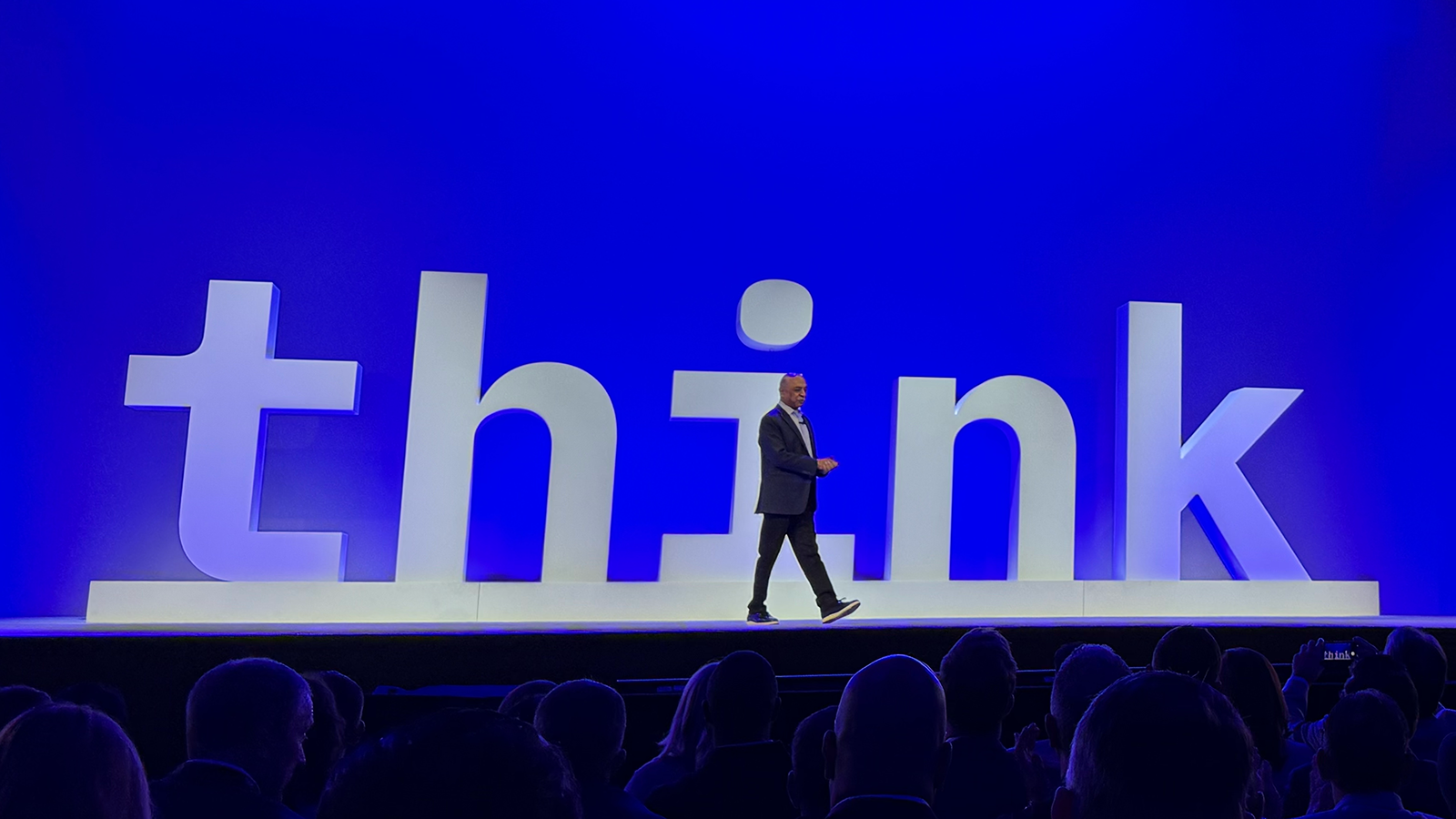
IBM Think 2026 marked a clear inflection point in the enterprise AI conversation. Across two dense days of keynotes, customer stories and product announcements, IBM’s message was strikingly consistent: AI is no longer an experiment, an enhancement, or even a competitive edge. It is fast becoming the operating model for modern organisations.
Using the themes set out in Arvind Krishna’s Day One keynote as a foundation, and reinforced by practical examples shared across both days, Think 2026 framed a shift from aspiration to execution, and from AI‑enabled to AI‑first.
The key takeaways that stood out are as follows:
- AI-first is not the same as AI-enabled.
- The execution gap is real – and shrinking.
- Smarter AI beats bigger AI.
- Architecture and data still matter more than models.
- Governance is shifting from constraint to enabler.
- Adoption is the real unlock.
- This is industrialisation, not experimentation.
But before we dig deeper, it’s worth looking at IBM’s broader strategic roadmap. It can be seen to be coalescing around three core vectors:
1. AI-first enterprises: The push to embed AI across entire workflows, not just individual tasks.
2. Hybrid cloud architecture: Positioned as the operational backbone for AI, enabling flexibility, resilience and control across environments.
3. The Quantum Frontier: While still emerging, IBM continues to invest heavily in quantum computing as the next major leap in computational capability, particularly for complex optimisation and simulation problems.
1. AI‑first is not the same as AI‑enabled
A central theme running throughout the conference was the distinction between using AI and being built around it. As IBM’s leadership repeatedly emphasised, many organisations are still treating AI as a layer applied to existing processes. This approach delivers incremental efficiency, but it caps impact.
An AI‑first enterprise, by contrast, designs workflows, decision‑making and systems with AI at the core. AI becomes the default way work gets done, not a supporting feature. This requires rethinking operating models end‑to‑end, from data flows and governance to skills and organisational structure.
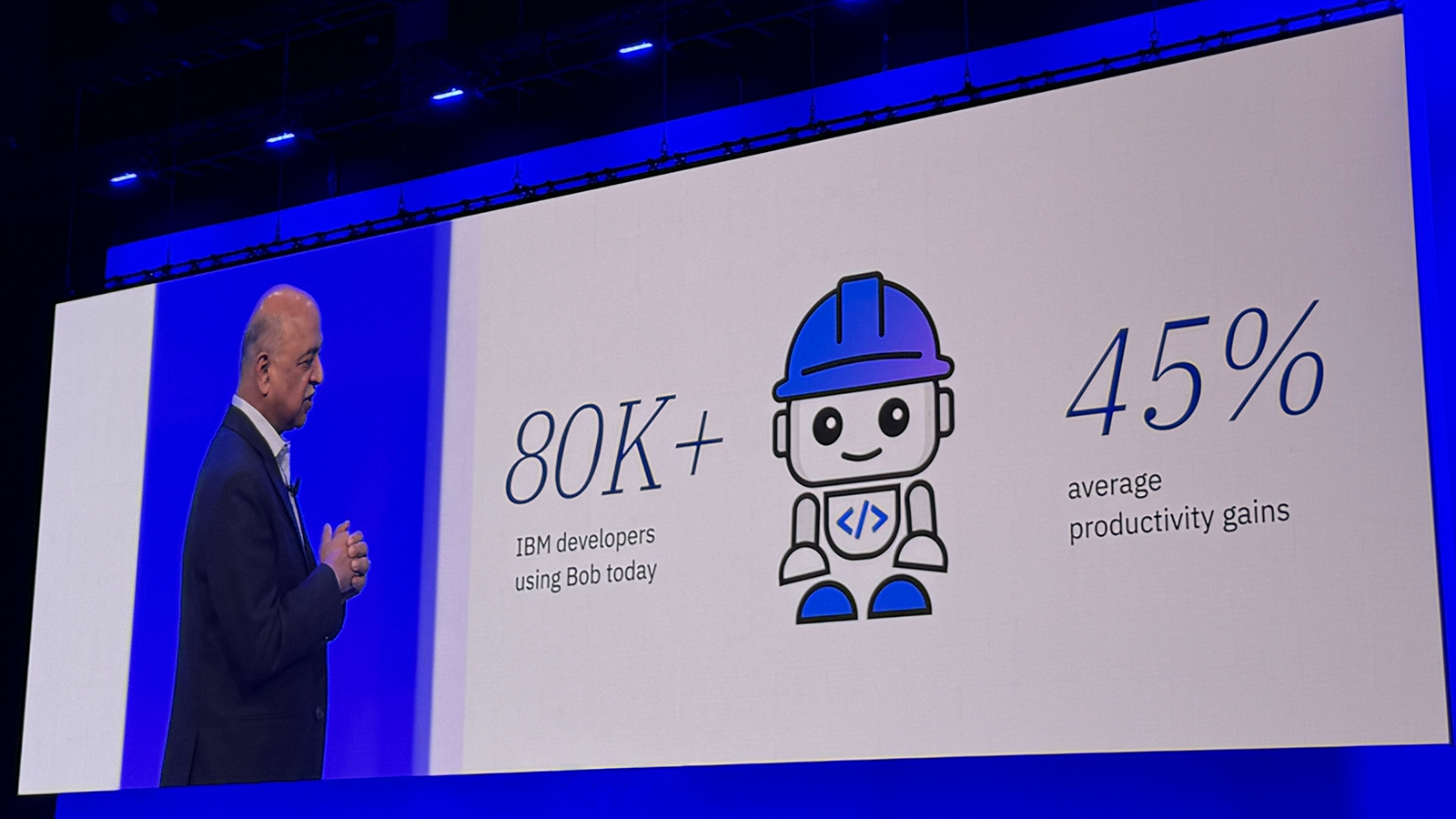
IBM positioned its own platforms – including IBM Bob, IBM Concert and Sovereign Core – as enablers of that shift, but the broader message was clear: technology alone is not enough. Moving to AI‑first is a system‑level transformation.
2. The execution gap is real – and shrinking
One of the most telling tensions highlighted at Think 2026 is that while executive belief in AI is high, clarity on execution often isn’t. Leaders expect AI to drive growth, but many still struggle to articulate where that value will come from.
- Around 80% of executives expect AI to drive revenue growth by 2030
- Only 20% can clearly articulate where that growth will come from
That’s not just a capability gap; it’s a strategy gap.
Enterprises are long on ambition but short on clarity. AI is still largely confined to pilots, proofs of concept, and narrow use cases, rather than being deployed across full business processes where it can generate measurable commercial impact. And until organisations move beyond fragmented adoption, AI will remain a cost-saving tool rather than a revenue driver.
Day Two, however, showed tangible progress. IBM Consulting and customer speakers moved the conversation firmly from promise to production, sharing real‑world examples of AI delivering return on investment today – not in theory, and not years from now. From healthcare and insurance to retail and media, AI‑driven workflows are already reshaping how organisations operate.
The message was pragmatic: pilots are easy. Scaling AI across real business processes – with governance, resilience and accountability built in – is where competitive advantage is won.
3. Smarter AI beats bigger AI
 Another consistent theme was that progress in enterprise AI is not about ever‑larger models, but about fit‑for‑purpose intelligence. IBM highlighted that the vast majority of AI workloads today are performed by smaller, more specialised models designed for specific tasks.
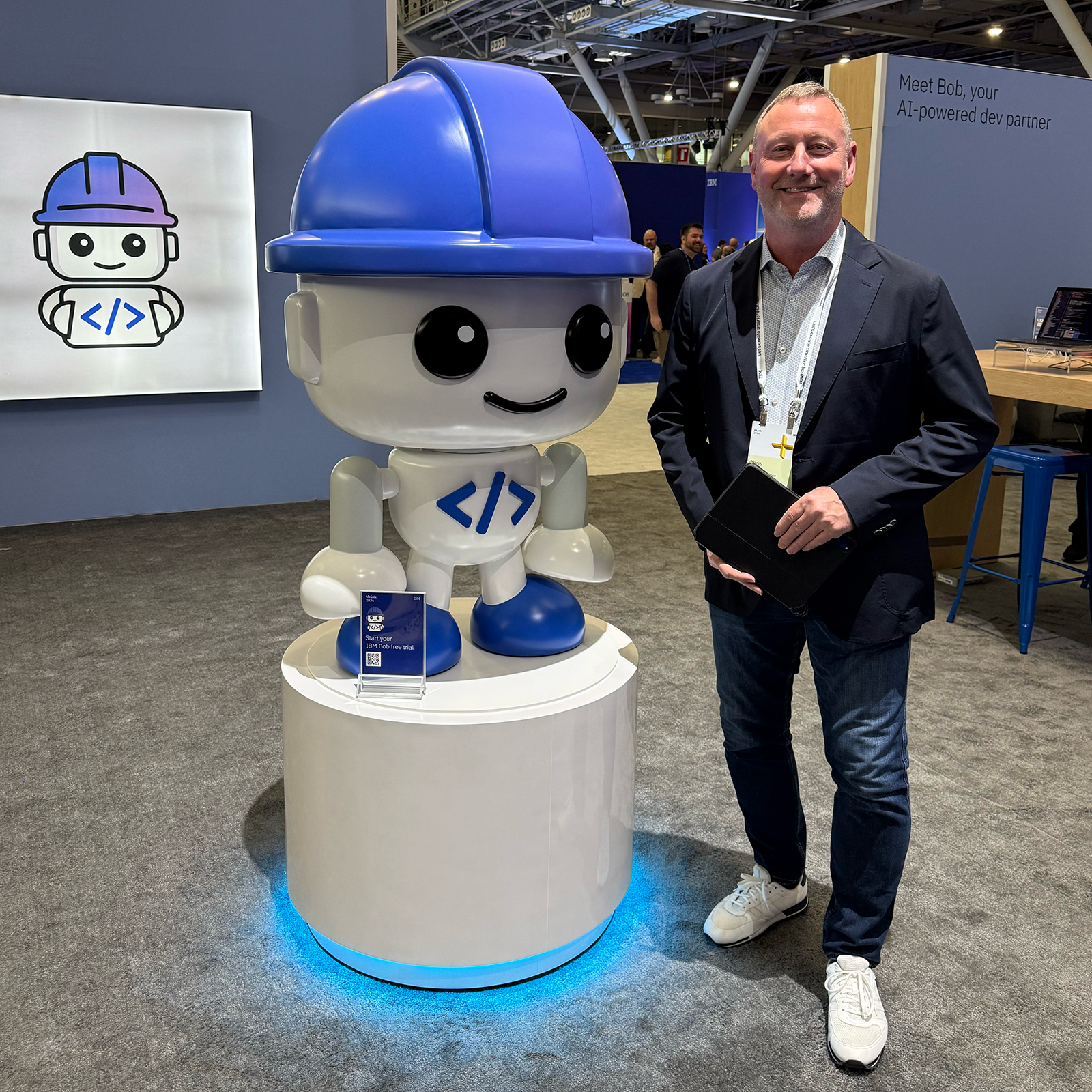
This is where orchestration becomes critical. Tools like IBM Bob were presented as ways to route work to the right model based on cost, performance and accuracy, while keeping humans in the loop. The emphasis was on control, transparency and value, rather than raw model power.
In practice, this signals a maturing market: enterprises are moving away from experimentation with general‑purpose models, towards deliberate, economically grounded AI architectures.
4. Architecture and data still matter more than models
If AI is the engine, data and architecture are the fuel and drivetrain. Multiple sessions reinforced that poor data foundations and fragmented infrastructure quickly turn AI initiatives into expensive liabilities.
Returning to Krishna’s day one keynote, he outlined four principles shaping IBM’s approach to enterprise AI:
- Open – avoiding vendor lock-in and enabling interoperability
- Hybrid – spanning on-prem, private and public cloud environments
- Sovereign – giving organisations control over data, models and governance
- Responsible – ensuring AI is explainable, auditable and compliant
Of these, hybrid stood out most clearly. As Krishna put it: “Hybrid is not a compromise. Hybrid is the architecture that brings you resilience.”
IBM doubled down on its view that hybrid cloud is not a compromise, but the architecture that reflects reality. Enterprises need to run AI across on‑premise, private and public environments, while maintaining sovereignty, compliance and resilience.
The warning was stark: data can be a goldmine, or it can be a landfill. The difference is architectural intent, and competitive advantage comes from managing that complexity, not pretending it doesn’t exist.
5. Governance is shifting from constraint to enabler
Fear around AI risk surfaced repeatedly. Not fear of missing out, but fear of messing it up. As AI agents move from assisting humans to acting on their behalf, trust, oversight and explainability become non‑negotiable.
IBM reframed governance not as a brake on innovation, but as the mechanism that allows AI to scale safely. Sovereignty, auditability and explainability were positioned as prerequisites for speed, not obstacles to it.
This shift in thinking reflects a broader maturity in the market: responsible AI is no longer about ethics slides, but about operational control.
6. Adoption is the real unlock
Technology and architecture only go so far without people. A recurring insight from Day Two was that executive literacy and workforce adoption now define the pace of AI transformation.
While AI leadership roles such as Chief AI Officers are becoming common, employee adoption still lags. Effective transformation depends on leaders setting the tone and embedding AI into everyday work, rather than isolating it within specialist teams.
Several customers highlighted that the biggest gains often come not from replacing people, but from freeing them up – allowing humans to focus on judgment, creativity and empathy while AI handles orchestration and execution.
7. This is industrialisation, not experimentation
Perhaps the most important shift at Think 2026 was tonal. AI is no longer framed as emerging, optional or experimental. It is being positioned as the defining operating model for enterprises over the next decade.
IBM’s own “Client Zero” narrative reinforced this: the company is applying the same AI, automation and hybrid cloud approaches internally that it advocates externally, generating substantial productivity gains.
For organisations still circling the runway, the implication is clear. The question is no longer whether to adopt AI, but how deliberately and how deeply it is embedded.
Final thought
IBM Think 2026 didn’t introduce a single revolutionary idea. Instead, it delivered something arguably more important: coherence.
Across strategy, architecture, tooling and culture, the message aligned around one conclusion – AI‑first enterprises are already being built, and the gap between leaders and laggards will widen quickly.
The technology is ready. The real challenge now is organisational readiness.
These might interest you
IBM Bob & watsonx
IBM Bob isn’t here to replace the engineers on your project. It’s here to make them faster, sharper, and more Read MoreIBM Think 2025: Unlocking the Full Value of Enterprise AI
This week, in Boston, USA, IBM held their annual IBM Think conference. As ever, it promised to be a week Read MoreHas IBM Think inspired you to take action on your own AI journey? DeeperThanBlue can help.
+44 (0)114 399 2820
info@deeperthanblue.com
Get in touch