
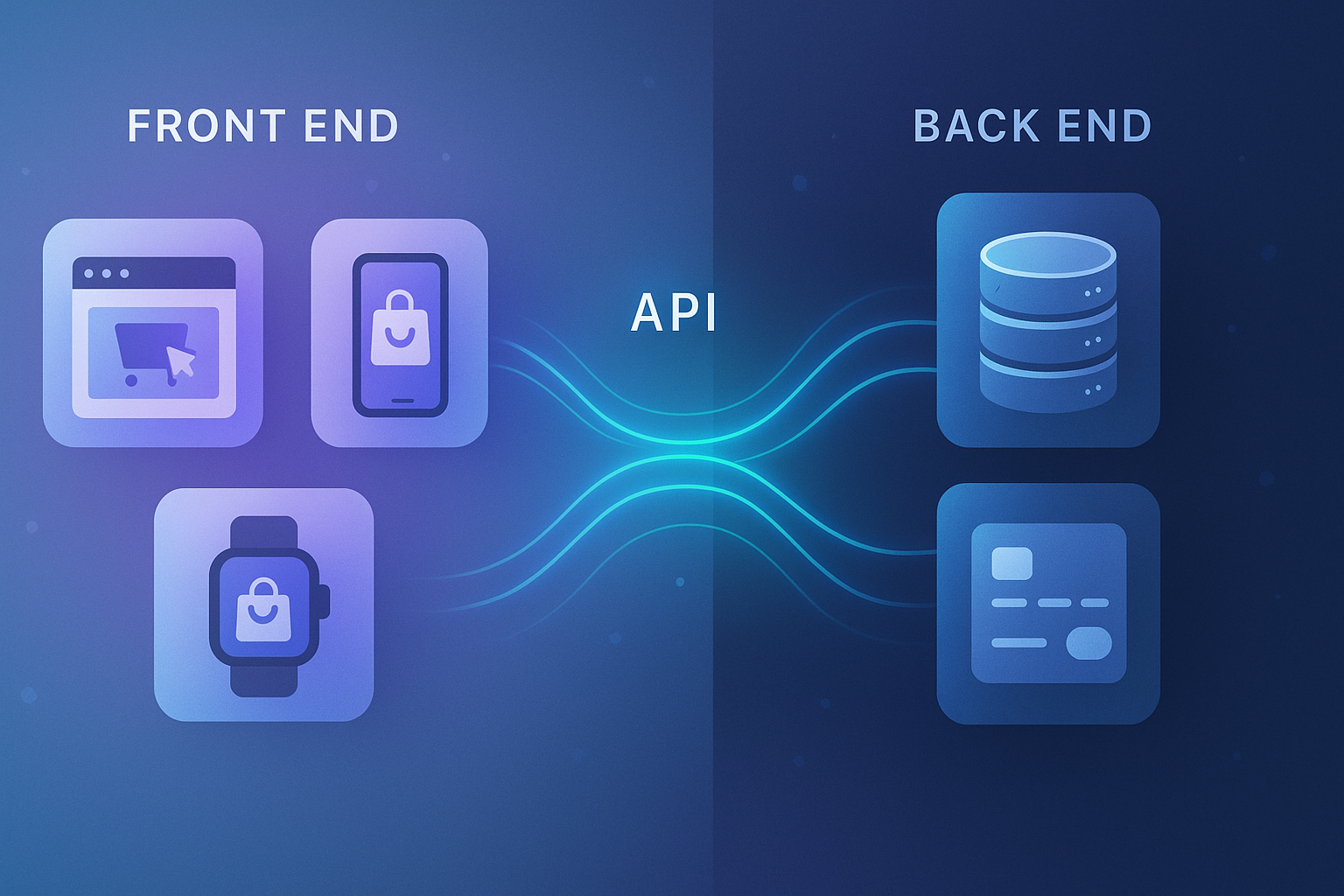
In recent years, the conversation around headless commerce has shifted from “if” to “when”. For many established ecommerce brands, the idea of tearing out and replacing their entire tech stack overnight is unrealistic. Operational risk, limited resources, and the need to maintain daily performance make a full headless migration feel daunting. So, what are the best practices to follow to see headless success?
Going headless successfully means adopting a phased, modular approach – starting with high-value areas, testing incrementally, monitoring KPIs, optimising continuously, and scaling gradually for improved UX and measurable ROI.
In this article, we explore why ecommerce businesses adopt headless strategies, the phased approach we use at DeeperThanBlue, and how one client significantly increased cart conversion rates through a modular headless implementation.
What is headless commerce?
Headless commerce involves decoupling the front end of an eCommerce site from the backend application. This separation allows your eCommerce agency or frontend developers to innovate freely with the customer-facing parts of your site, without being limited by backend constraints.
Additional benefits include:
- Ability to switch ecommerce platforms without a full rebuild.
- Greater creativity in content and customer experience
- Seamless cross-device functionality
- Agile testing and optimisation for higher conversion rates
- Easier replication for micro-brands or international expansion
Read our guide on the Benefits of Adopting Headless Commerce for more information.
Modular Approach to Headless Commerce
Going headless doesn’t have to be an all-or-nothing decision – which can be a big concern for many businesses. A phased, modular approach enables brands to modernise customer experiences gradually. At DeeperThanBlue, we start by understanding your business and long-term goals.
Key steps include:
- Discovery & Planning – Define business needs, objectives, and map out a migration roadmap.
- Pilot Project – Start with a low-risk area, like the cart or account pages, then validate the solution.
- Integration & Testing – Connect APIs, third-party tools, and systems while testing functionality.
- Expansion – Gradually migrate additional components, ensuring each piece functions correctly.
- Optimisation & Scaling – Gather user feedback, monitor performance, and fine-tune before full rollout.
This approach reduces operational risk, spreads cost over time, and ensures measurable ROI at each stage.
CXOne: Bridging the Gap Between Legacy Systems and Modern Frontends
Modern ecommerce front ends such as React or Vue can be easily integrated with legacy backend systems using tools like CXOne. This allows brands to enhance customer experience without replacing existing platforms entirely.
Benefits include:
- Rebuilding high-value pages (like carts and checkout) without touching backend operations
- Real-time stock validation, delivery options per line item, and branch selection
- Modular apps that can be lifted and shifted into a fully headless architecture when ready
By bridging legacy systems and modern frontends, CXOne ensures a smooth transition while maintaining day-to-day operations.
Pilot Projects: Testing the Waters Before Full Implementation
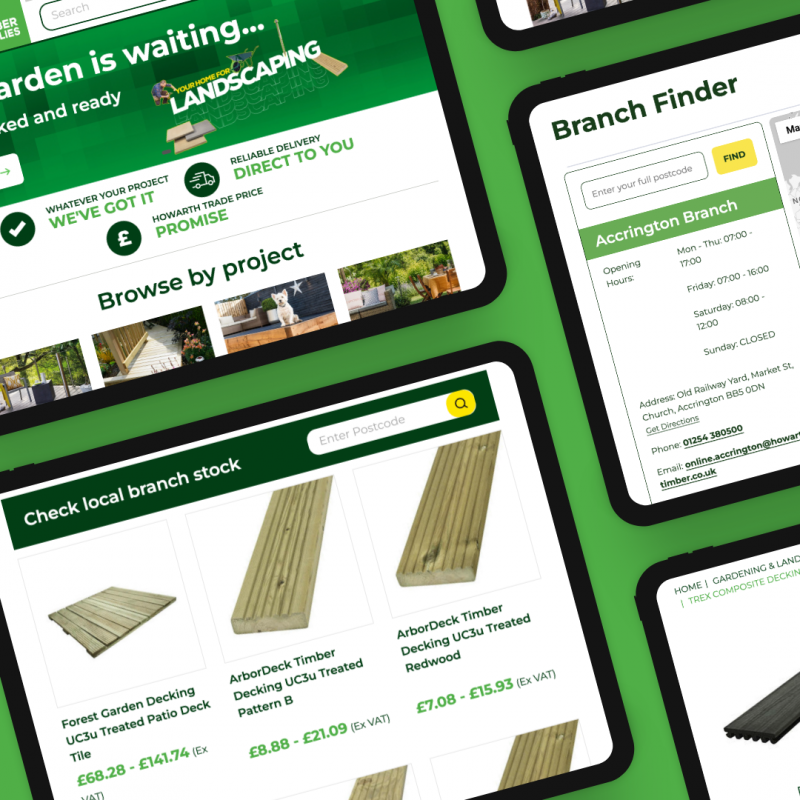
Running a pilot project is a critical step for reducing risk. For example, our client Howarth Timber implemented a React-based cart app within their existing BigCommerce theme.
Features included:
- Offering delivery or collection options per line item
- Giving the customer the ability to choose their collection branch from the cart
- Run real-time stock checks before checkout
- Clearly displaying accurate delivery costs in real-time
- Grouping line items by their fulfilment method and branch for improved UX
This incremental approach allowed Howarth Timber to improve their checkout UX without the cost or disruption of a full rebuild.
KPIs for Headless Implementation
Tracking the right metrics will ensure that your headless migration can deliver tangible results. Key KPIs include:
- Conversion Rate – Measure improvements in checkout completion and revenue
- Page Load Times – Headless front ends often improve performance significantly
- Customer Engagement – Track interactions with new features like dynamic content or personalised recommendations
- Operational Efficiency – Evaluate how much backend workload is reduced through modular apps
For Howarth Timber, the new cart delivered:
- 41.18% month-on-month increase in conversion rate
- 40.63% year-on-year increase in conversion rate
Continuous Optimisation for Improved User Experience
A headless solution isn’t a one-off project. Continuous monitoring and optimisation are essential to maintain agility and competitive advantage – ultimately influencing the overall success of the project and your business.
- Gather ongoing user feedback to identify friction points
- Test frontend iterations to optimise layout, copy, and UX
- Scale new components incrementally while ensuring backend stability
- Leverage APIs to integrate emerging tools and marketing automation
This iterative process ensures long-term success and allows your ecommerce platform to evolve with your business needs.
Summary
The long-term plan for Howarth Timber is to become fully headless—but through a controlled, phased rollout.
By identifying high-value, high-friction areas like the cart and account management pages, and replacing them with React apps that integrate via APIs, we’re helping them modernise at their own pace, whilst delivering measurable ROI at each stage.
This phased hybrid approach to headless ensures operational stability, reduced financial and technical risk, and incremental performance improvements.
If you’re considering headless commerce for your business, remember: You don’t need to go all in, all at once.
These might interest you
Headless Commerce: An essential step for eCommerce retailers
Headless commerce: An essential step for eCommerce retailers The eCommerce world has changed significantly in the last decade. We’ve seen Read More